
Daniel Muñoz’s essay yesterday, Abolish the president, is both provocative and timely, though I also found its initial prescription uncomfortable. The essay’s revised title, “The problem is presidentialism,” is more apt, better reflects its argument, and seems like a more desirable springboard. The original framing, however, states the quiet danger pretty loudly, so I don’t want to shy from it. It seems clear that Dr. Muñoz is correct; a conversation about movement on this should be engaged in because our current path is untenable, but the risks of failure are — potentially literally — catastrophic. The country faces the immediate-need issue of resolving expanding executive authority, but such a massive constitutional restructuring has never taken place and should not be entertained flippantly.
Since the essay was published, Joseph Heath has added that he believes we are “too far down the route of presidentialism to reverse course now.” His rationale is reasonable, but I do not want to see the United States become more like France. Instead, I would like to agree with his conclusion, but for a different reason. The concept of asabiyyah may not be western, but it is real and underappreciated. (Ayaan Hirsi Ali has repeatedly spoken with scholars of Ibn Khaldun while attempting to raise awareness in the west related to this and other attempts at destabilization) We are already at levels of factionalism and individualism significant enough to disrupt our political capacities, and meddling begets reaction. I have spent a lot of time on the plains of Kansas and in the mountains of Alabama: both are full of people more competent and committed than they are generally given credit for. I cannot imagine that they or their compatriots across the country would respond well to a determined attempt to make such a significant change without considerable, potentially unreasonable, compromise. Therefore, reform of the office and the structures surrounding it seems more appropriate than outright abolition.
David Pinsof’s recent “Strange bedfellows: the Alliance Theory of political belief systems” provides empirical data that may help to illuminate a more strategic path forward. The paper asserts that political belief systems do not derive from abstract moral values or stable ideological dispositions, they are outputs of a coalition-formation psychology. If Pinsof is correct, then people do not defend institutions on principle — they defend their people. Which means the question may not be whether the office of the presidency is structurally defective, but which specific mechanisms within it are most abusable, and whether those mechanisms are ones that any particular coalition has a strong reason to protect. A wholesale restructuring asks every coalition to gamble their position simultaneously. It’s a big ask. Targeted reform of specific powers asks each coalition only whether it wants to defend that particular tool — a much smaller, and potentially more resolvable, problem.
Muñoz is correct that while the flaws in the office of the presidency may be particularly abused by this demagogue or that, the real problem is the mechanical and incentive structure that makes abuse possible. “The problem is presidentialism” follows that notion to arrive at its original title, “Abolish the president.” The structural critique of presidentialism, rooted in Linz’s comparative work on dual legitimacy and fixed terms, seems genuine and blaming our maladies on Dr. Trump is indeed silly. Where I find myself in disagreement is not with Dr. Muñoz’s diagnosis, but with his surface-level prescription.
Reform, not Revolution
“The problem is presidentialism” starts with an acknowledgement conceding that “it’s profoundly risky to make changes to a country’s basic institutions” before recommending abolishing the office that heads one co-equal third of our government. Later in the essay, this seems to be rightly tempered to a call for movement that quietly signals the seriousness of resisting tyrannical overreach. Muñoz points out that “often the old system’s problems merely rearise in a new form” and then waves it away by claiming “there is a demonstrably viable alternative—namely, parliamentarism” as if parliamentary states don’t also experience corruption struggles. The incentives and tools available to the executive seem more determinant than the executive’s title or direct connection to voters.
Muñoz quotes Canadian philosopher Joseph Heath as saying both, “the U.S. President can issue flagrantly unconstitutional spending orders, in order to avert present crises, and people will follow those orders” and “Trump is not just acting in an unconstitutional manner, he is clowning on the U.S. constitution. The executive can move quickly, while courts move slowly, and can easily be obstructed or intimidated. And so if the executive simply does enough stuff, quickly enough, the courts cannot, or will not, keep up. The American system is thereby transformed, practically overnight, from a system of judicial supremacy to one of executive supremacy, ruled by prerogative.” This ignores both that America was never intended to be a solely legal state — the law is not sovereign, the people are — and that temporarily violating the constitution has, at times, been necessary (eg. Lincoln and habeas corpus), with the mechanisms for restraining those violations turning slowly, but grinding fine.
The essay’s core argument is that two features distinguish a president from a prime minister: the president derives democratic legitimacy directly from the people rather than from parliament, and the president serves a fixed term not adjustable by the legislature. Muñoz argues both features are defects. The dual-legitimacy problem is real: two institutions both claiming to speak for the sovereign people creates an issue when attempting to authoritatively resolve a conflict. The fixed-term problem is also real: it creates elections that can feel zero-sum and a near-irremovable executive. These structural observations track the comparative literature Muñoz cites, and they are concerning.
But dual-legitimacy also allows equally self-important institutions to resist each other on behalf of the people and, ideally, forces compromise or gridlock as every unilateral option available lacks durability. Near-irremovable and irremovable are not the same. And parliamentary elections, which keep the power of the executive and legislature within one party or coalition, can also feel zero-sum.
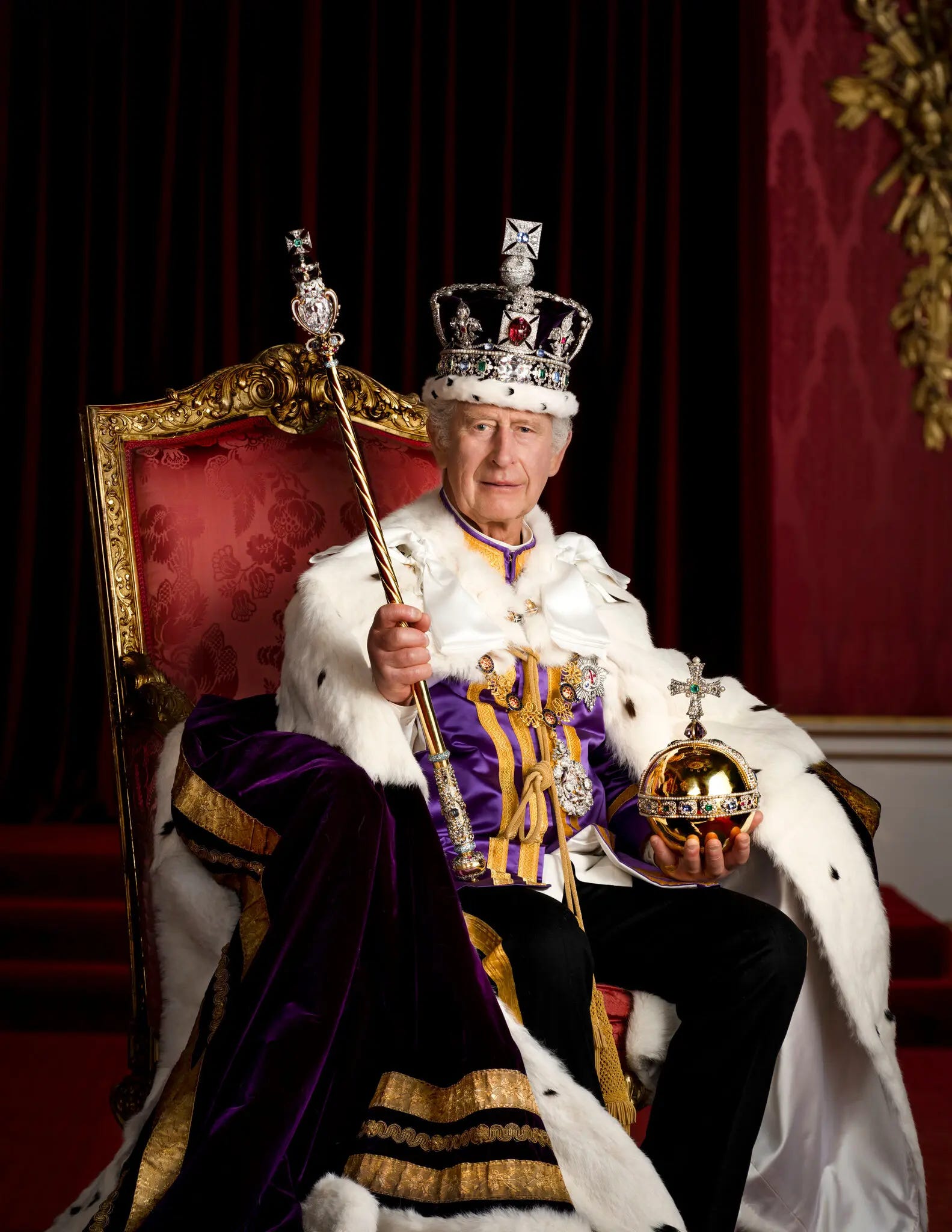
Muñoz implies that Britain could serve as a positive example of what we could move to, but Britain shows that reforming an over-powered executive office can be more effective than eliminating it. Things have certainly changed in the last few centuries, but attempting to abolish the office of the King went very, very poorly for Britain and ultimately resulted in the monarch being restored to authority while watching its office reformed and its power diminished. Reform worked, abolition didn’t.
Additionally Europe is full of parliaments (sans presidents) that seem to be experiencing plenty of struggles along with us. Parliamentary states like Hungary and Israel reveal that significant corruption issues can persist without presidentialism. As a result, the inference I resist here is the move from “these incentives generate specific pathologies” to “the office must therefore be abolished.” The gap seems substantial and not easily closed.
Not Exceptional, but still an Exception
Linz’s comparative instability data deserves some inspection. The empirical backbone here comes from developing democracies in Latin America and elsewhere. Even Linz himself named the United States as an exception to his claims. Moving from what the data establishes in those cases to this prescription doesn’t seem like a conclusion that should survive scrutiny. Tibor Rutar’s recent piece “Developed democracies virtually never break down” illustrates that our democracy is very likely not going to break down. So Linz’s exception and Rutar’s assertion incline me to believe that we simply are not in danger of collapse, only overreach. That is a much smaller problem and warrants a more focused solution.
Muñoz claims a president is “directly elected by the people.” This assertion may be true for non-American presidents, but seems quickly invalidated by the fact that the American president is elected by electors representing their state legislature’s preferred choosing method, not the popular will of the American public. American presidents are not directly elected by the people, a fact that used to be even more true. We could cause our president to stop fitting Muñoz’s definition of a president by simply strengthening the electoral college and cutting the people out entirely. Obviously this wouldn’t work and isn’t what he meant or called for, but it highlights the reality that American presidents are not like other presidents, things like dual-sovereignty, WEIRD habits, scale, and historical weight provide significant adjustments to the calculus. Even Linz recognizes this and highlights the United States as the exception to his arguments. The events of the last 15 years may make us less exceptional, but they have neither overcome our ingrained resistance to tyranny nor made us Honduras.

The pardon catalogue is offered as evidence that presidentialism structurally produces corruption, but it demonstrates something narrower: that presidents are willing to abuse a specific discretionary power. The causal mechanism connecting that abuse to independent legitimacy and the fixed term is not established. Frankly, I don’t think it exists. Presidents generally do their most dastardly things during lame-duck periods or when they’re halfway out the door already, why would we believe a Prime Minister would act differently? This problem is not in the office, but in the specific power. A president who lacked the pardon power entirely would still have independent legitimacy and a fixed term, but would not be issuing corrupt pardons.
When reflecting on the need for a “proportionate, systemic solution,” Muñoz points out “The Supreme Court won’t do it.” (emphasis mine) The Supreme Court could do more to restrict our current president. It has, through its experience, authority, and discretion, chosen not to. It seems that our chief judges believe they should not restrict him at the current time. We can disagree with the choice not to exercise their power to act as a check, but our dissatisfaction does not render their power non-existent. So, the issue here is not that the ability to restrain the president does not exist, but that the people with that power have chosen not to. This is important because a Parliament could just as easily choose not to exercise power it had available to check an overreaching Prime Minister.
Dual Legitimacy as Legitimate Architecture
Or as Linz puts it,
“A parliamentary regime in the strict sense is one in which the only democratically legitimate institution is parliament; in such a regime, the government’s authority is completely dependent upon parliamentary confidence.”
Muñoz reads dual-legitimacy as a defect because it creates conflicts that cannot be resolved by appeal to a single authoritative source of democratic mandate, but there is a more Madisonian interpretation that sees this as the arrangement’s purpose rather than its failure. Moving to such a parliamentary structure would reduce the effectiveness of the Great Compromise that was made at our inception, one without which many states would not have agreed to transfer power to a federal government. The president acts as a balancing tool to discourage polished urban power centers from dominating agrarian hinterlands and repeating the historical rhyme of abusing rural small folk. The tool isn’t perfect, but it does seem to help.
The constitutional architecture was not designed to produce efficient governance. It was designed to make the consolidation of power excessively difficult. It checks the ambition of would-be tyrants with the ambition of other would-be tyrants. A quick scan of the dominant personalities in Congress reveals that would-be tyrants inhabit that office at least as often as the office of the presidency. When the president and Congress both claim democratic mandate and are therefore structurally incentivized to oppose and limit one another, citizens have representatives on both sides of the conflict with institutional incentives to constrain each other. This would not be true if the legislature and the executive were always in aligned hands. The dual-legitimacy problem is real. Whether it is a defect or a feature depends on one’s perspective.
Holding conflicting ideas in tension protects and propels us. The physical analogy is using water and fire to make steam, but in politics we hold things like liberty and democracy or capitalism and socialism in tension regularly. The same notion applies to dual sovereignty and, I believe, dual legitimacy. Simply put, the president’s veto pen has saved us from congressional overreach time and time again. The president can act like a tyrant, but so can Congress. Pitting them against each other allows their wrath to be consistently directed toward one another, distracting the would-be tyrants and giving both intellectuals and folk the ability to speak and act freely.
Parliamentary systems resolve the dual legitimacy problem by subordinating the executive to the legislature. This, when applied to America, introduces two problems. The first is that we currently have 3 co-equal branches. They can each check each other, and in significant conflicts two can band together to overwhelm the third. Subordinating the executive to the legislature would reduce us from an odd number of checks to an even stalemate. That would increase the significance of the dual legitimacy problem and make extricating ourselves that much more difficult. The second is that this assumes American parties would function like British parties, withdrawing confidence credibly and disciplining the executive through coalition mechanics. American parties are ideologically fragmented and institutionally weak by comparative standards. There is tremendous diversity of thought between Americans living thousands of miles apart in communities whose populations differ by orders of magnitude. The accountability mechanisms that make parliamentary systems responsive in Britain depend on party discipline that the American party landscape simply does not provide. Thus, it seems more likely that this shift would produce a chronic coalition dysfunction similar to what was experienced in Italy than it would the British-style responsive accountability Muñoz envisions. This is not a peripheral concern, it is years-of-lead-level serious.
Risk Calculus
The essay acknowledges the transition costs of institutional abolition and then proceeds past them. I think they, for a reason more specific to the United States than to institutional change generally, warrant more weight.
The United States is a nuclear-armed state with global military commitments, a reserve currency, and federal administrative infrastructure whose disruption would propagate consequences well beyond its borders. We are approaching a half-billion privately owned guns and have millions of rugged individualists zealously committed to their own image of what America is and means. I’m not saying that we as a nation should be bound to the preferences of our gun-toting co-citizens, merely that any conversation about fundamental changes has to reckon with this reality. Constitutional transitions are among the most destabilizing events a polity can undergo even under favorable conditions. The expected cost of a failed transition here is not just domestic dysfunction, for decades administration after administration has shown that where America goes, so goes the world. If we foul up something this big, we will bring the modern world down with us.
This asymmetric risk belongs in the calculus. Its magnitude argues for targeted reform of specific mechanisms over the structural gamble abolition would require.
Beyond this, David Pinsof’s work on political belief systems suggests that ideological commitments are not principled positions held in place by reason — they are outputs of coalition psychology, accidental artifacts of historically contingent alliances. People do not circle the wagons around ideas; they circle the wagons around their people. Which means that the features of presidentialism Muñoz wants to dismantle may not be the features that trigger defensive mobilization — but an attempt to abolish the President certainly will. We can describe abolition as a structural reform all we like, but many will experience it as an attack on their team.
This is why reform strikes me as genuinely separable from the question of abolition. Fixing the malapportionment of electors or access to corruption-encouraging powers and incentives does not require resolving the deeper structural question, and the argument that reform would dangerously increase presidential legitimacy ignores the reality that presidential power may be more easily diluted than dissolved.
Conclusion
The revised title more accurately represents the argument that appears in the essay’s final paragraphs: a serious public challenge to presidentialism, even if it never reaches a constitutional amendment, would itself exert pressure on executive behavior and build political support for a more active legislature and stronger parties. The original title, “Abolish the President”, was less a proposal than a provocation — seemingly an attempt to shift the frame of the conversation from one that has been operating too small, to one that recognizes the scale of the structural problems that will outlast the current administration.
Indeed, Muñoz admits in a note, “In my heart of hearts, I’d be in favor of modification, too. But I do think someone needs to make the case for the gigantic change, because we’re currently erring on the side of not thinking big enough.” This seems to drive home that the point here is not to upend the world, but to start a conversation that recognizes we are, whether we like it or not, approaching a new world.
His final answer, “The existence of a popular challenge to presidentialism, even if never translated into law, would itself serve as a check on presidential power” seems to be an intellectual way of expressing the populist notion that a government should be afraid of its people. And I agree. Ministers may prefer the power of the pulpit, minutemen the rifle, and intellectuals the pen, but all agree: the government’s power must be restrained. The government – president, congress, and lawyers – should remember that, ultimately, politics by other means is always possible and rarely predictable, that their duty is to the people, and that the people will, one way or another, always revoke their consent from a tyrant in whatever way they are able.
The diagnosis is sound. Abolition is the wrong prescription. But a conversation is long overdue.
===
Sources
Pinsof, D., Sears, D. O., & Haselton, M. G. (May 2023). Strange bedfellows: The Alliance Theory of political belief systems. Psychological Inquiry. DOI:10.1080/1047840X.2023.2274433
Rutar, T. (2026, April 6). Developed democracies virtually never break down. Political Economy, Stats, and Society.

Linz, J. J. (1990). The perils of presidentialism. Journal of Democracy, 1(1), 51–69. https://www.ir101.co.uk/wp-content/uploads/2018/11/Linz-The-Perils-of-Presidentialism.pdf